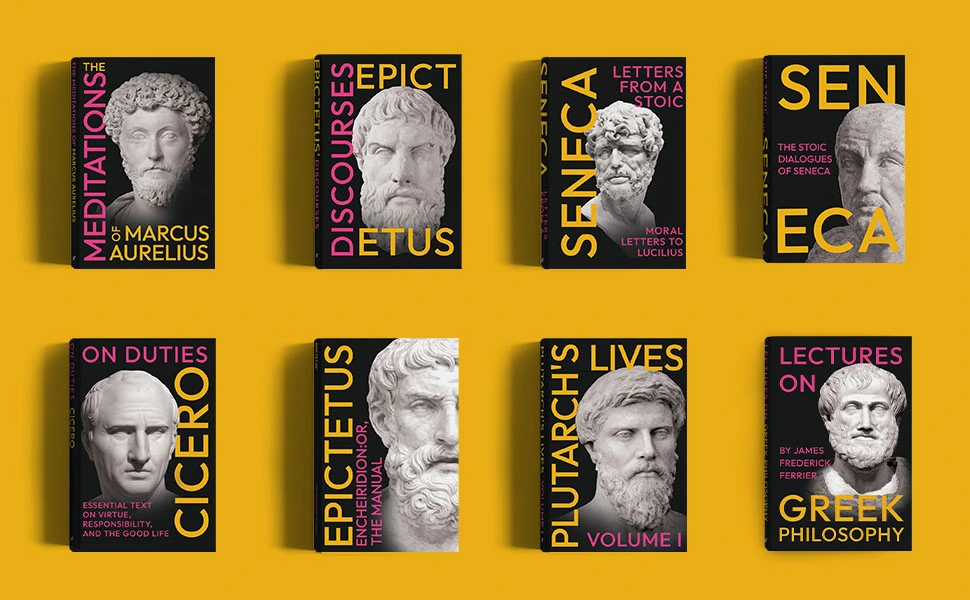
Any worthwhile Stoic reading list begins with the original texts, where the core principles of Stoicism were first set down by the philosophers themselves. Whether you are discovering Stoicism for the first time or looking to deepen your understanding of its teachings, these are some of the best books for exploring the ideas of self-discipline, resilience, virtue, and the art of living well.
The books gathered here highlight the original Stoic writings, bringing together the reflections of emperors, philosophers, poets, and statesmen whose work has guided readers for centuries. This reading list offers a carefully curated path through the essential texts, each one contributing to a richer understanding of a tradition that continues to guide modern life, to help you build a thoughtful and enduring Stoic library.
At its core, Stoicism is a school of ancient philosophy that focuses on the pursuit of virtue, self-discipline, and inner resilience. It was founded in Athens in the early third century BC and was later developed by thinkers like Seneca (c. 4 BCE–65 CE), Marcus Aurelius (121–180 AD), and Epictetus (d. 135 AD). It teaches that true fulfilment comes not from superficial things, but from mastering one’s own thoughts, acting with integrity, and accepting what lies beyond one’s control.
Among the best Stoic books to read are The Meditations by Marcus Aurelius (c. 170AD), Letters from a Stoic by Seneca (c. 65AD), and Discourses by Epictetus (c. 108AD). These works form the philosophical foundation of the Stoic tradition, and continue to shape contemporary ideas around discipline, resilience, and self-mastery.
There have been countless iterations of this philosophy beyond the original writings. While each book in this Stoic reading list offers a different perspective on Stoicism, Meditations is often considered the essential starting point for anyone seeking to understand Stoicism in its most personal and enduring form.
Written as a series of private reflections by the Roman emperor, Meditations remains one of the clearest and compelling introductions to Stoicism, exploring themes of discipline, mortality, virtue, and self-command.
It provides a unique perspective on how to lead a meaningful life, with a philosophy rooted in Stoic principles of wisdom, courage, justice, and temperance.

Marcus Aurelius Antoninus (121–180) was Roman emperor as part of the Nerva–Antonine dynasty from 161 to 180. His Meditations, published posthumously, is a profound work offering practical guidance on maintaining composure in the face of adversity, finding inner peace amidst chaos, and living with integrity in a world filled with challenges.
Whether you seek philosophical insight or a deeper understanding of the Stoic way of life, this work continues to inspire and guide those on a journey toward self-mastery and serenity in the modern world.
For those looking to learn about Stoicism in its most practical, ethical form, Seneca’s Letters from a Stoic, would be a great place to begin. Written as a series of moral letters to his friend Lucilius, Seneca’s writings explores how Stoic principles might be applied to the ordinary trials of everyday life, from anger and grief, wealth and ambition, to the passing of time itself.

From one of the most influential philosophers of Ancient Rome, Lucius Annaeus Seneca the Younger (c. 4 BC–AD 65), these deeply personal letters are more than just Seneca’s reflections on Stoicism. Reading almost as a diary, this volume is rich with the wisdom of living in the pursuit of tranquillity. Contemplating his own turbulent years, he speaks on the importance of self-control, the nature of happiness, and the inevitability of death.
His work remains a compelling and accessible introduction to Stoic philosophy, as relevant today as it was two thousand years ago.
Among the best Stoic books for readers seeking a deeper understanding of Stoicism, Discourses preserves the teachings of Epictetus, former slave turned Roman philosopher, explores the very foundations of Stoic thought.
Central to these writings is the stoic principle known as the dichotomy of control: the distinction between what is within our power – our judgements, desires, and actions – and what lies beyond it

This collection presents the teachings of Epictetus as recorded by his student, Arrian. Rather than abstract theory, these texts offer direct, often challenging instruction on how to live a rational, ethical, and resilient life, aiming to shape character rather than inform intellect.
Through clear examples and probing questions, Epictetus explores how misplaced desires and false judgements could be the true sources of human suffering. It is an essential text in any serious Stoic reading list.
Recommended reading alongside Discourses as an essential Stoic text is the Enchiridion. Regarded as one of the most important and widely read Stoic works, the handbook of Epictetus is a short manual of practical ethical advice compiled from his teachings.
Distilling the lectures found in his longer Discourses into brief and memorable principles, the text offers direct guidance on self-control, resilience, and the disciplined pursuit of virtue. It was designed specifically for daily application.

A concise manual of Stoic wisdom, The Encheiridion presents a collection of short, practical maxims. Focusing on the essential distinction between what lies within our power and what does not, known as the dichotomy of control, Epictetus teaches that virtue is the only true good.
Practical in tone and focused on everyday life, this volume remains a timeless guide to resilience, self-mastery, and ethical practices – a perfect volume for those seeking clarity and profound change through Stoic philosophy.
To grasp a full range of Stoic teachings, Cicero’s writings on virtue and responsibility expand beyond the traditional Stoic canon. His work On Duties remains one of the most influential texts on moral and ethical philosophy, and is an essential for any Stoic reading list. It examines the relationship between honour, responsibility, justice, and the good life, offering readers a timeless meditation on how principle and duty should govern both personal conduct and public life.

Organised into three books:
Although it was written before the formal emergence of Stoicism, the surviving fragments of the Greek philosopher Heraclitus reveal ideas that would later heavily influence the philosophy’s central themes, earning its place on the broader Stoic reading list.
Fragments from the Fire focuses on change, order, and the tension between chaos and harmony, to inform self-knowledge and understanding. The text offers readers an insight into the pre-Stoic foundations that inspired many of Stoicism’s great thinkers, and would help shape the school of thought.
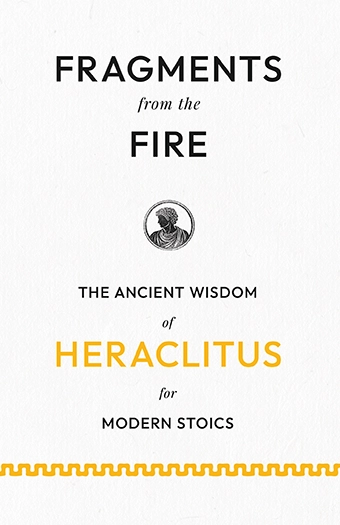
Heraclitus lived in Ephesus around 500 BC and is known to have written only one book in antiquity. What remains today are over 500 fragments that represent his distinctive, often cryptic, philosophy in a series of sayings and short passages. This work presents the idea that reality is never static but always changing and transforming, centred on the world being in constant flux.
His unique collection of philosophical musings remains a cornerstone of early Stoic thought and an essential addition to any stoic library.
Bringing this Stoic reading list to a close, The Stoic Mindset offers a clear and accessible guide to the core ideas of the practice.
For those looking for a more general introduction to Stoic thought beyond the ancient philosophers themselves, this work distils the principles of Stoic philosophy down into an accessible format. It outlines the principles and historical development of the philosophy, making it an ideal companion to the original texts.
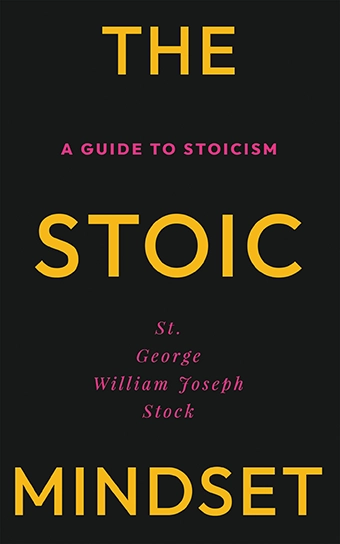
Rather than promising control over life’s outcomes, this book focuses on what Stoicism has always emphasised: control over judgment, character, and response.
The teachings in this volume are grounded in everyday experience, addressing how to face difficulty, manage emotion, make sound decisions, and remain steady in an uncertain world. Ideal for readers interested in Stoicism from a more general perspective and the principles at its heart.
As a collection, these works encapsulate the core of Stoic thought, spanning its central texts, its philosophical influences, and the writings that have shaped its enduring legacy.
Whether you are approaching these books in search of practical wisdom, intellectual discipline, or a deeper philosophy by which to live, this Stoic reading list offers a lasting introduction to some of the best Stoic books ever written.