There are many great literary friendships that sit at the heart of classic literature. From those who swore solemn oaths to one another, bickered constantly, trudged across miles of moorland, or got shot in drawing rooms to prove their loyalty, true friendship has been one of the quieter preoccupations of the novel since the form’s beginnings, yet is one of its most enduring.
Join us as we explore a few of the greatest companions, confidants, and kindred spirits from the works of Jane Austen, Arthur Conan Doyle, the Brontës, L. M. Montgomery, and many more.
"A bosom friend – an intimate friend, you know – a really kindred spirit to whom I can confide my inmost soul. I've dreamed of meeting her all my life."
— Anne of Green Gables, L. M. Montgomery
Our personal favourite literary friendship, and top of this list, is that of Anne Shirley and Diana Barry. Anne arrives at Green Gables with a long-held vision of the friend she wants, a true friend of her own, a kindred spirit. Within days of meeting her new neighbour, Diana, they have sworn a solemn oath of eternal friendship. From there on, the pair endure the scrapes and triumphs found in the long ordinary years of growing up together.
Throughout Montgomery’s charming series, their friendship is an unwavering thread. Diana is the steady one of the pair – calm where Anne is dramatic, practical where Anne is romantic – content to let Anne be Anne. Generations of readers have learnt the phrase ‘kindred spirit’ from this novel, and rather a lot of them have spent their lives looking for their own Diana.
“There’s nobody like my own Diana after all. Do you remember that evening we first met, Diana, and ‘swore’ eternal friendship in your garden?” … “You don’t know what your friendship meant to me. I want to thank you here and now, dear, for the warm and true affection you’ve always given me.”
— Anne of Avonlea, L. M. Montgomery
One to Keep, One to Gift
We’re giving 15% off when you buy two keepsake editions of Anne of Green Gables.
The kindred spirits gift set is an invitation not just to revisit a beloved classic, but to honour a friendship.

"Look here, Emily Byrd Starr, I like you—heaps. I’ve always liked you … I want you for my chum."
— Emily of New Moon, L. M. Montgomery
Twelve years after Anne of Green Gables, L. M. Montgomery wrote a second great heroine, less famous than Anne, and rather closer to Montgomery herself. Emily Byrd Starr is an eleven-year-old aspiring writer who, on the death of her beloved father, is taken in (with some reluctance) by her stern aunts at the old family farm of New Moon, on the same Prince Edward Island where Anne grew up. The first friend Emily makes in her new village of Blair Water is Ilse Burnley: motherless, neglected by her brilliant doctor father, with hair the colour of corn-silk and a temper like a thunderstorm.
Where Anne and Diana are complementary, balancing out one another’s characters, Emily and Ilse are kindred in a wilder sense. Both are prone to passions their elders would much prefer they didn’t have, and they’re inclined to magnificent quarrels. They call each other terrible names. They forgive each other entirely. They grow up, side by side, across three books, conspirators in literature and in life.
‘"You're not hurt, Watson? For God's sake, say that you are not hurt!" It was worth a wound – it was worth many wounds – to know the depth of loyalty and love which lay behind that cold mask.’
— The Case-Book of Sherlock Holmes, Arthur Conan Doyle
When John Watson returns from war with a shoulder wound and a small army pension, he needs somewhere to live. He arrives at Baker Street to meet a tall, thin, hawk-eyed man with a spare room. The young man is Sherlock Holmes, the world’s first consulting detective. They will share that Baker Street apartment, on and off, for the better part of two decades.
Holmes is not, by his own design, a man given to displays of feeling. He is a reasoning machine, faintly contemptuous of anything that might cloud his work. And then Watson is shot, the mask slips, and we discover – along with a startled Watson – that the great detective has been steadfastly devoted to his unlikely companion all along. It is the literary friendship that survives fifty-six short stories, four novels, a tumble at Reichenbach Falls, marriages, a return from the dead, and the long quiet of retired life. John Watson is the one constant in Sherlock Holmes’ life.

"Whatever our souls are made of, his and mine are the same. … Nelly, I am Heathcliff."
— Wuthering Heights, Emily Brontë
Emily Brontë’s only novel is set on the dramatic, high moors of West Yorkshire, in and around two neighbouring houses: Wuthering Heights, the farmhouse of the Earnshaw family, and Thrushcross Grange, the more polished home of the Lintons four miles across the heath. As a small girl, Catherine Earnshaw is given a strange playmate when her father returns from a trip to Liverpool with a dark, silent, half-starved orphan boy he has found on the streets there. They name him Heathcliff. He and Cathy grow up together on the moor, wild and inseparable, and what passes between them in those years is the engine of everything afterwards.
We are accustomed to hearing Cathy and Heathcliff described as one of the greatest love stories of English literature – the 2026 Emerald Fennell film adaptation starring Margot Robbie and Jacob Elordi has prompted a great deal of fresh argument about that – but the line Cathy gives the housekeeper Nelly is not really the language of romance. It is the language of recognition. They are, by her account, made of the same substance. This literary friendship comes first in the novel and survives everything the characters face, even the grave itself.

"Ratty, my generous friend! … Will you overlook it this once and forgive me, and let things go on as before?" "That's all right, bless you!" responded the Rat cheerily. "What's a little wet to a Water Rat?"
— The Wind in the Willows, Kenneth Grahame
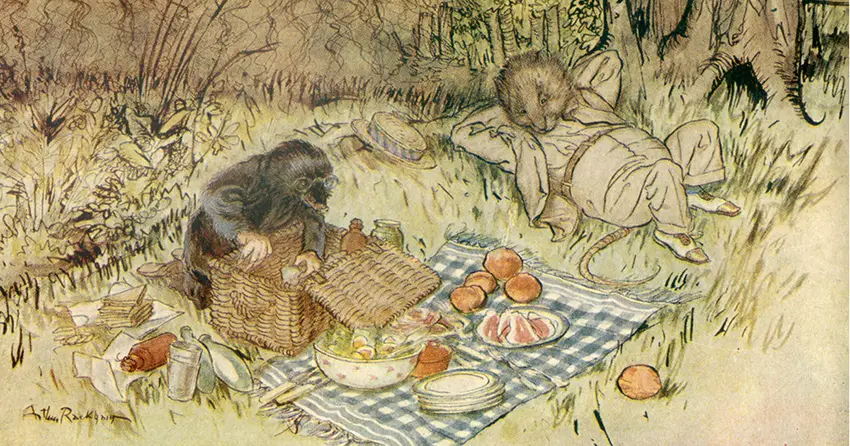
Kenneth Grahame’s 1908 novel, written for his small son Alastair as bedtime stories, is set along a quiet English river. The animals of the riverbank live gentle lives, paying calls on one another, picnicking, and boating. Mole is a quiet, home-loving fellow who one bright spring morning throws down his whitewash brush in the middle of cleaning his burrow and runs out into the world. Down at the river he meets a Water Rat, who is sculling about in a small blue-and-white boat. They go out on the water together and Mole is forever changed for the better.
Mole and Ratty have the gentlest of all the literary friendships on this list. Mole is impressionable and earnest, Ratty patient and quietly wise, and the bulk of the book is the two of them embarking on gentle adventures together. Grahame, writing in the long Edwardian afternoon before the First World War, understood that some of the best friendships are not about big events but the steady habit of simply being alongside one another.

"He isn't old, nor anything bad, but good and kind, and the best friend I've got, next to you."
— Little Women, Louisa May Alcott
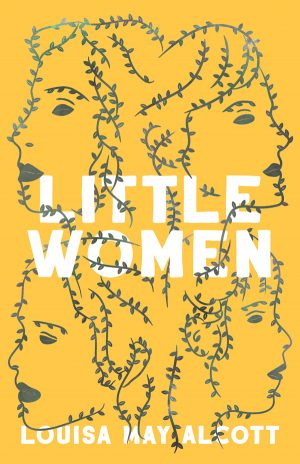
In a small New England town during the American Civil War, four sisters, Meg, Jo, Beth, and Amy March, are growing up in genteel poverty while their father serves as a chaplain at the front. Next door, in the much grander house, lives a lonely boy called Theodore Laurence, known to everyone as Laurie. Jo, fifteen, furious, and determined to be a writer, forces her sisters to allow him to join their childhood romps, and the two of them soon become inseparable.
Readers have been arguing about Jo and Laurie for 150 years. Should she have married him? Did he ever really love Amy? But the question that gets less attention is the one Alcott herself seems most interested in: can a boy and a girl simply be the best of friends, equals in mischief and confidence, without that friendship having to resolve itself into something else? Jo thinks they can, fiercely and stubbornly, and the novel rather agrees with her.
"The least agreeable circumstance in the business was the surprise it must occasion to Elizabeth Bennet, whose friendship she valued beyond that of any other person."
– Pride and Prejudice, Jane Austen
Elizabeth Bennet is sharp-tongued and romantic in her convictions. Her closest friend lives at the next estate over. Charlotte Lucas, plain by her own honest estimation, twenty-seven, and entirely without illusions about what the world has on offer for an unmarried woman of small fortune.
When the pompous clergyman Mr. Collins is rejected by Elizabeth and turns, just a few days later, to Charlotte, she accepts him on the spot. Elizabeth is appalled. She thinks her friend has thrown herself away on a ridiculous man for the sake of a comfortable parsonage. Charlotte knows exactly what she has done and exactly why, and explains it to Elizabeth with great clarity. Although they disagree, deeply, on the most important question their world poses to women, their friendship survives it. Elizabeth visits Charlotte at her new home in Kent. They frequently write to each other. Neither tries to talk the other round.
Jane Austen, who herself never married, and lived all her life dependent on her family, knew exactly how the world worked for the Charlottes of it, and ensures this literary friendship is all the stronger for their differences.

While not exclusive to the canon of classic literature, what each of these literary friendships share is a bond powerful enough to hold the central thread of an entire novel, and in some cases an entire series. The kindred spirits and steadfast companions of these classic books are among the chief reasons we keep returning to their stories. The reader who has sworn eternal friendship with Anne Shirley, stood in arms against the patriarchy with Jo March, and ran wild on the moor with Cathy and Heathcliff, has found their own literary friendships within the pages and their bookshelves are the fuller for the company.