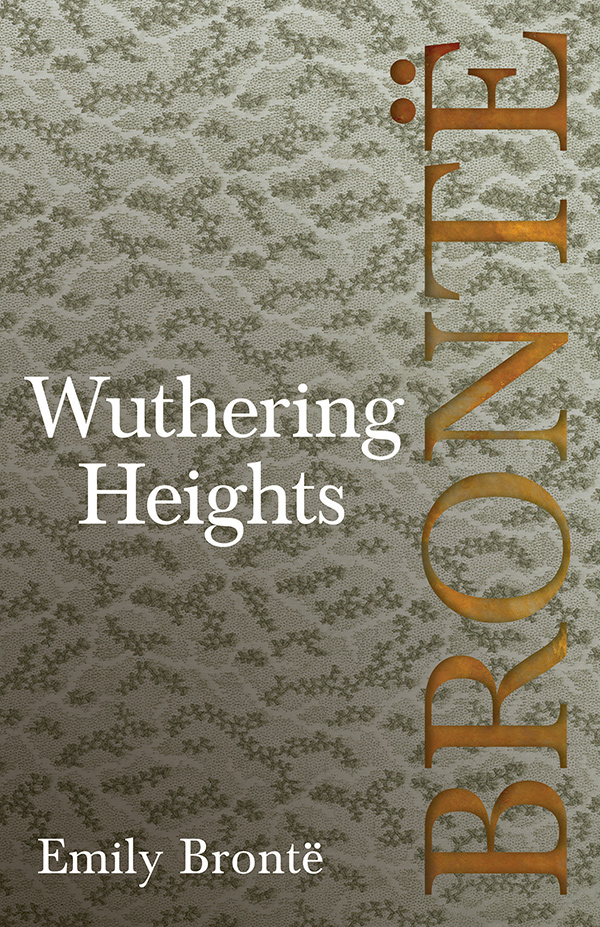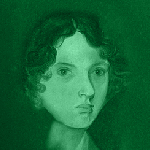
Emily Brontë is the author of the enduring literary masterpiece Wuthering Heights,
one of the most powerful and influential novels in English literature.
Emily Brontë
Wuthering Heights is Emily Brontë’s Gothic masterpiece. A dark and haunting tale of undying love and haunting obsession, set against the wild, unforgiving Yorkshire moors.
Renowned for her singular vision and poetic intensity, Emily Jane Brontë was born in 1818 in Thornton, Yorkshire, England, the fifth of six children in the Brontë family. She spent most of her life in the remote village of Haworth, where the wild Yorkshire moors would profoundly shape her imagination and writing.
Emily Brontë was raised in a highly intellectual household under the care of her father, Reverend Patrick Brontë. Alongside her sisters Charlotte and Anne, she received much of her education at home, developing an early love for literature, poetry, and storytelling. The siblings created elaborate imaginary worlds, and Emily in particular was drawn to themes of nature, freedom, and emotional extremity.
Reserved and intensely private, Emily found solace in solitude and the natural landscape surrounding Haworth. Her deep connection to the moors would later become central to her most famous work.
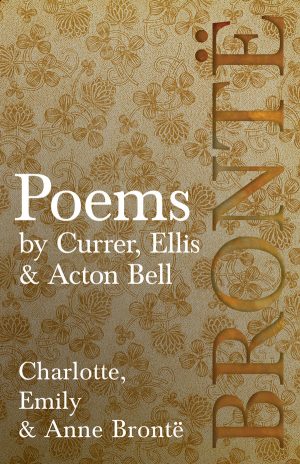
Before writing her novel, Emily was an accomplished poet. In 1846, her poems were published alongside those of her sisters in Poems by Currer, Ellis, and Acton Bell, using male pseudonyms to avoid the prejudice faced by women writers of the time. Though the collection received little attention initially, Emily’s poetry is now celebrated for its emotional depth, spiritual questioning, and elemental imagery.
Emily Brontë
Poems – by Currer, Ellis, and Acton Bell is a powerful and intimate collection that marks the first published work of the Brontë siblings, Charlotte, Emily, and Anne, writing under their now-famous pseudonyms.
In 1847, Emily published her only novel, Wuthering Heights, under the name Ellis Bell. The novel’s dark themes, complex characters, and unconventional structure shocked many contemporary readers. Its portrayal of obsessive love, moral ambiguity, and psychological intensity set it apart from the social novels of the Victorian era.
Initially controversial, Wuthering Heights has since come to be regarded as one of the greatest novels ever written and a cornerstone of English literature.
Emily Brontë’s novel has inspired numerous adaptations across film, television, theatre, radio, and opera, attesting to its lasting cultural power. One of the most famous screen versions is the 1939 film adaptation, Wuthering Heights, starring Laurence Olivier and Merle Oberon, which helped introduce the story to a global audience.
Subsequent adaptations have reimagined the novel for new generations, including Wuthering Heights starring Ralph Fiennes and Juliette Binoche, as well as modern reinterpretations that emphasise the novel’s raw emotional intensity and bleak landscape. Stage and radio adaptations continue to explore the novel’s haunting atmosphere, fractured narrative, and unforgettable characters.
Emily Brontë’s work has had a profound influence on both the Gothic and Romance literary traditions. Wuthering Heights expanded the Gothic novel beyond castles and supernatural terrors, transforming wild landscapes, psychological obsession, and emotional violence into sources of horror and awe. Its brooding setting, morally complex characters, and sense of doom helped redefine Gothic fiction for the modern age.
At the same time, the novel reshaped the Romance genre. Rather than presenting idealised or socially acceptable love, Emily Brontë depicted passion as destructive, transgressive, and deeply unsettling. This radical portrayal of love has influenced countless later writers, from Victorian novelists to modern romance and literary fiction authors, who continue to draw on her exploration of desire, identity, and emotional extremity.
Death was not an abstract idea in Emily Brontë’s life but a constant, intimate presence. From an early age, she experienced repeated bereavement: her mother died when Emily was just three years old, followed by the deaths of her two eldest sisters, Maria and Elizabeth, only a few years later. These losses shaped the emotional atmosphere of the Brontë household and left a lasting imprint on Emily’s inner world.
The family home at Haworth Parsonage stood beside the churchyard of St Michael and All Angels’, separated from the graves by only a narrow boundary. The parsonage windows overlooked the burial ground, where generations of villagers, and members of Brontë’s own family, were laid to rest. She lived, wrote, and contemplated life within sight of the gravestones, an environment that made mortality a daily, unavoidable fact.
This closeness to death is powerfully reflected in Brontë’s writing. In Wuthering Heights, death is not an ending but a persistent force that shapes identity, memory, and desire. Her poetry similarly reveals a preoccupation with mortality, the afterlife, and the soul’s endurance. Rather than treating death with fear alone, she often approached it as a state of freedom, release, or spiritual continuation.
Emily Brontë died in 1848 at the age of 30, likely from tuberculosis. Despite her short life, her contribution to literature has proven timeless. She is buried at St Michael and All Angels’ Church in Haworth, alongside members of her family.
Brontë’s literary output was small but extraordinarily influential. Though she published only one novel during her lifetime, her originality, emotional power, and fearless rejection of convention have ensured her a lasting place in literary history.
Discover our beautiful editions of Wuthering Heights and Emily Brontë’s poetry, available in hardback, paperback, or ebook format, here.
Emily Brontë
Wuthering Heights is Emily Brontë’s Gothic masterpiece. A dark and haunting tale of undying love and haunting obsession, set against the wild, unforgiving Yorkshire moors.